 by
by Few places on Earth combine natural beauty, cultural prestige, and sporting heritage as seamlessly as Saint Moritz, a high‑alpine resort town in Switzerland’s Engadin Valley. Best known for its snow‑capped peaks, luxury hotels, and world‑class winter sports offerings, Saint Moritz isn’t just a seasonal getaway — it’s a global stage for international events that attract elite athletes, celebrities, dignitaries, and discerning travelers from around the globe.
But while outsiders see the glamour of opening ceremonies, elite competitions, and well‑executed hospitality, there’s an intricate world of planning and logistics behind every major event. From years‑long preparations to sophisticated technical installations and environmental safeguards, the town functions like a precision‑tuned machine — because behind every perfect event is an unseen army of experts, volunteers, planners, and pioneers working months or even years ahead.
In this article, we go deep behind the scenes to explore how St. Moritz prepares for major international events, the challenges it overcomes, and the remarkable orchestration that makes everything look effortless on the big day.
A Storied Legacy of International Events
St. Moritz’s reputation as an international event hub didn’t happen overnight. Its history includes two Winter Olympic Games (1928 and 1948) — making it one of the few places in the world to have hosted the Olympics more than once. These early milestones laid the foundation for a culture that embraces high‑profile competition and world‑class hospitality.
Since those Olympics, St. Moritz has continued to host major global events such as:
- FIS Alpine World Ski Championships
- Snow Polo World Cup
- Classic Car Runs on Ice
- International Bobsleigh and Skeleton Competitions
- Cultural and Gastronomic Festivals
Each event attracts global audiences, bringing with it economic stimulation, media exposure, and prestige — but also demanding detailed preparation that touches every aspect of life in the region.
Long‑Term Planning: From Bid to Execution
Major events don’t happen spontaneously. For elite competitions like the Alpine World Ski Championships or World Cup‑level races, preparation often begins 4–7 years in advance. Initial planning includes:
1. Bidding and Approval
For international federations such as the International Ski Federation (FIS) or the Federation of International Polo (FIP), hosting rights must be earned through a formal bid. This process involves:
- Presenting detailed infrastructure plans
- Demonstrating hospitality capacities
- Providing long‑term financial commitments
- Ensuring safety and regulatory compliance
Only once a bid is accepted does the actual preparation begin.
2. Strategic Planning and Coordination
Once an event is confirmed, multiple stakeholders collaborate:
- Local government agencies
- Tourism boards
- Sports federations
- Hospitality providers
- Transportation authorities
- Volunteer networks
Together, they craft rigorous timelines, budgets, safety plans, and operational frameworks.
Transforming the Landscape: Venue Construction
What sets St. Moritz apart is its ability to transform its natural environment into highly functional event spaces without undermining ecological integrity.
On Frozen Lakes: Snow Polo and Ice Arenas
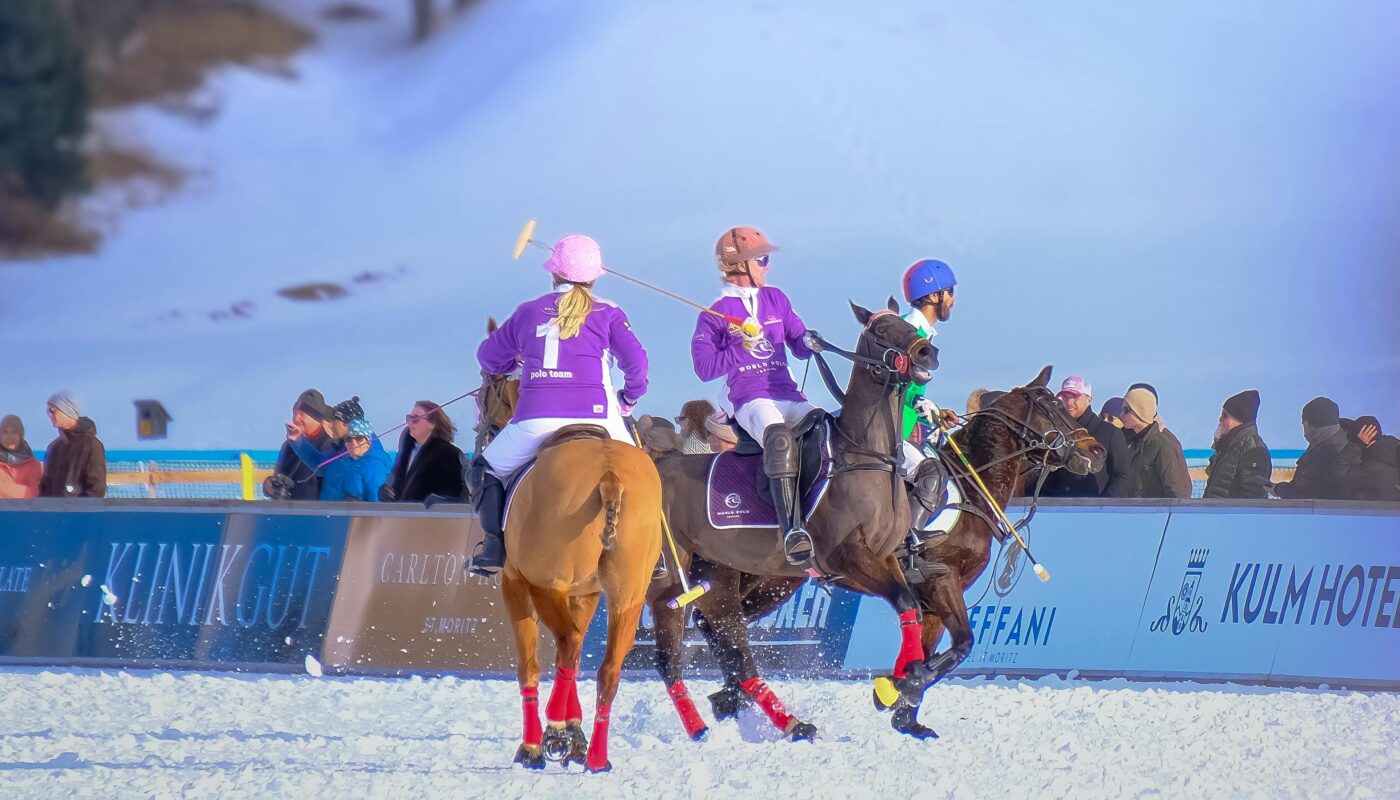
One of the most visually stunning events hosted in St. Moritz is the Snow Polo World Cup St. Moritz, played on the surface of Lake St. Moritz — an incredible spectacle of sport on ice.
Behind the scenes, preparing a frozen lake for a safe international sporting venue is a complex task:
- Ice‑Thickness Monitoring: Long before construction begins, specialists continuously measure ice thickness to ensure it can support heavy equipment and tens of thousands of spectators.
- Field Construction: A regulation‑sized polo field (approximately 200 × 100 meters) is groomed directly on the frozen surface.
- Grandstands and Hospitality: Temporary grandstands, VIP areas, media platforms, and logistics tents are assembled, often within tight weather windows.
- Safety Inspections: Structural engineers and safety officers perform thorough checks to ensure spectator zones, fencing, and access routes meet international standards.
The result: what appeared to be a frozen lake becomes a fully functioning sporting arena within days.
Mountain and Valley Venues
In other cases, the mountainous terrain itself becomes part of the venue:
- Ski areas are equipped with race tracks that are famous worldwide.
- Mountain lifts and gondolas are optimized for increased capacity.
- Ridge-top locations are made secure and reachable for TV crews and spectators.
Each space requires careful land assessment, erosion control planning, and pathway construction to make it both safe and broadcast‑friendly.
World‑Class Infrastructure and Logistics
Hosting international events in a remote Alpine environment presents intricate logistical challenges. Accommodation, transportation, and technical capacity must all be scaled up while maintaining quality service — and St. Moritz handles this with precision.
Accommodation Management
St. Moritz is known for luxury hotels, but elite events require more than first‑class rooms:
- Partner hotels reserve blocks of rooms for athletes, VIPs, officials, and media months ahead.
- Chalet rentals and private estates are coordinated for corporate sponsorships.
- Concierge services are trained specifically for event calendars, transport coordination, and guest needs.
Transportation Networks
Despite its mountainous location, St. Moritz is exceptionally accessible — but preparations still require extensive planning:
- Train schedules on the Swiss network are optimized to handle large crowds.
- Shuttle services operate between airports (often Zurich or Milan) and St. Moritz.
- Local transit routes are redesigned for event days to avoid congestion.
- Parking zones and spectator traffic flows are choreographed to minimize delays.
All of this must function seamlessly even during harsh winter weather.
Cutting‑Edge Technical and Broadcast Capabilities
Major international events are not just sporting or cultural; they are global media phenomena.
Broadcasting Infrastructure
To ensure global coverage, St. Moritz sets up:
- Multi‑camera rigs and stabilized platforms
- Satellite uplinks for live feeds
- Press tents with high‑speed connectivity
- Dedicated broadcast zones for commentators
All of this must be compatible with international broadcasting standards and able to withstand freezing temperatures.
Safety and Emergency Systems
Alpine weather is unpredictable. Complex safety systems are installed including:
- Weather monitoring stations along event routes
- On‑site medical and emergency response facilities
- Evacuation and crowd‑control planning
- Communication systems for rapid coordination
The goal is always resilience — to ensure spectator and athlete safety even if conditions change rapidly.
Athlete Preparation and Training
St. Moritz isn’t just a host — it’s a training ground. Its high altitude (1,856 m above sea level) offers ideal conditions for endurance and performance conditioning.
Dedicated Training Programs
Elite athletes from around the world often arrive weeks before competition begins to acclimate and train on site. Local facilities and timed slopes are booked, schedules are coordinated with event calendars, and specialized support teams assist with:
- Altitude adjustment
- Snow and ice surface familiarization
- Equipment optimization
This level of coordination enhances performance readiness — a factor that top athletes and teams carefully consider when choosing competition destinations.
Environmental Responsibility and Sustainability
Hosting international events in the fragile Alpine environment comes with a moral and regulatory mandate to protect the ecosystem.
Ecosystem Safeguards
Environmental planners work alongside construction teams to minimize impact:
- Structures are installed temporarily and removed after use
- Snow and ice are monitored to prevent degradation
- Waste is carefully processed and recycled
- Vehicle emissions are controlled via designated access routes
St. Moritz has also embraced sustainability goals, aligning with broader Swiss environmental standards that emphasize ecological preservation and reduced carbon footprints.
VIP Hospitality and Guest Experience
Part of what makes events in St. Moritz so memorable is the hospitality experience itself — but elite guest service requires preparation too.
Exclusive Experiences
From private lounges to gala dinners, organizers coordinate:
- High‑end catering and service staff
- Curated cultural programs for VIP guests
- Exclusive viewing platforms and lounges
- Concierge services oriented to sporting schedules
Because it upholds Saint Moritz’s reputation as a premier international destination, luxury hospitality is just as important as the event itself.
Security and Crowd Management
High‑profile events attract global audiences and consequently require robust security strategies.
Integrated Protection
Security planning includes:
- Crowd movement mapping
- Surveillance systems integrated with local law enforcement
- Controlled access zones
- Emergency response coordination with fire, medical, and police units
Swiss security standards are rigorous, and preparation for an international event involves close collaboration among federal, cantonal, and local agencies.
The Human Force Behind the Scenes
Thousands of people contribute to the success of international events in St. Moritz — far more than spectators ever see.
Organizers and Planners
Event directors, project managers, and logistics experts shape every aspect of the timeline.
Technical Teams and Engineers
They install structures, monitor safety, and ensure all technology works under extreme conditions.
Hospitality Staff and Volunteers
Local residents often serve as volunteers, cultural ambassadors, and event staff, providing warmth and expertise that mechanical precision can’t replicate.
Media Support
Hundreds of broadcasters, reporters, and content creators work behind the scenes to deliver real‑time coverage to global audiences.
Economic Impact and Legacy
International events aren’t just isolated spectacles — they contribute significantly to the region’s economy and global reputation.
Economic Value
Major competitions stimulate:
- Hotel occupancy
- Retail and dining revenue
- Transportation bookings
- Long‑term tourism growth
Events like the Snow Polo World Cup alone generate millions in global economic value, while the visibility they bring enhances long‑term destination appeal.
Tourism and Brand Prestige
Every major event reinforces St. Moritz’s identity as a premium global destination — a reputation that draws visitors year‑round and ensures the region remains competitive with other Alpine resorts.
Conclusion: Precision Beyond the Spotlight
When international events unfold in St. Moritz — whether it’s a packed polo field on ice, a world‑class ski race, or a cultural festival — what visitors experience is only the visible tip of an enormous iceberg of planning and preparation.
Years of strategic scheduling, complex logistics, meticulous environmental planning, global broadcast coordination, and world‑class hospitality converge to make everything look effortless.
Behind the scenes are stories of engineers measuring ice thickness at dawn, logistics teams coordinating transport in snowstorms, volunteers guiding global visitors with a smile, and hospitality staff turning venues into welcoming spaces.
In every sense, St. Moritz doesn’t just host international events — it engineers them, blending precision with Alpine elegance to create experiences that are as seamless as they are unforgettable.