 by
by Glaciers are among the most breathtaking natural features on Earth. These vast rivers of ice carve mountains, feed lakes, and shape entire landscapes. Standing on one can feel like stepping into another world — a frozen expanse of blue crevasses, sparkling snowfields, and deep silence. But beneath this beauty lies hidden danger. Glaciers are not solid, predictable platforms. They are constantly moving, cracking, melting, and shifting.
Before anyone sets foot on glacier ice, it’s essential to understand the risks and how to manage them. Glacier travel is not just a scenic walk — it is a serious mountain activity that demands preparation, awareness, and respect for the environment.
This guide explains the most important glacier hazards, safety practices, essential gear, and decision-making principles to help you understand what it truly means to travel safely on ice.
Why Glaciers Are Dangerous
Glaciers may look like frozen stone, but they behave more like slow-moving rivers. Over time, gravity pulls the ice downhill, causing stress, fractures, and instability. Snow can hide these dangers, making the surface appear smooth while serious hazards lie underneath.
The biggest misconception beginners have is that glaciers are “just ice.” In reality, they are dynamic, unpredictable terrain.
Major Glacier Hazards
1. Crevasses
Crevasses are deep cracks in the glacier surface that form as ice stretches and bends. Some are narrow slits; others can be wide enough to swallow a vehicle. Many are tens of meters deep.
The danger: Snow bridges often cover crevasses, creating the illusion of safe ground. These bridges can collapse under a person’s weight.
Why this matters: Falling into a crevasse can cause serious injury, hypothermia, or death, especially if the person is not roped to others.
2. Seracs and Icefalls
Seracs are massive blocks or towers of ice formed in steep, broken glacier sections. Icefalls occur where glaciers flow over steep terrain, creating chaotic ice formations.
The danger: Seracs can collapse without warning. Icefall zones are unstable and exposed to falling ice.
3. Hidden Meltwater Channels
During warmer months, meltwater flows across and beneath glaciers. Streams can carve tunnels inside the ice.
The danger: Thin ice over these channels may collapse, causing sudden falls into freezing water.
4. Avalanches
Glaciers often lie below snow-covered slopes. Avalanches can sweep across glacier surfaces.
The danger: Even small avalanches can knock climbers off balance or bury them.
5. Weather Extremes
Mountain weather changes quickly. Whiteouts, storms, and sudden temperature drops are common.
The danger: Poor visibility can hide crevasses, while cold and wind increase hypothermia risk.
6. Ice and Rockfall
Warming temperatures loosen rocks and ice along surrounding slopes.
The danger: Falling debris can strike glacier travelers unexpectedly.
Why Experience Matters
Glacier safety is not intuitive. Reading about hazards is helpful, but experience teaches:
- How to spot subtle surface clues
- When snow bridges are weak
- How to navigate safely around crevasse zones
- When conditions are deteriorating
This is why first-time glacier travelers should go with certified mountain guides or experienced mountaineers.
Essential Glacier Travel Gear
1. Ropes
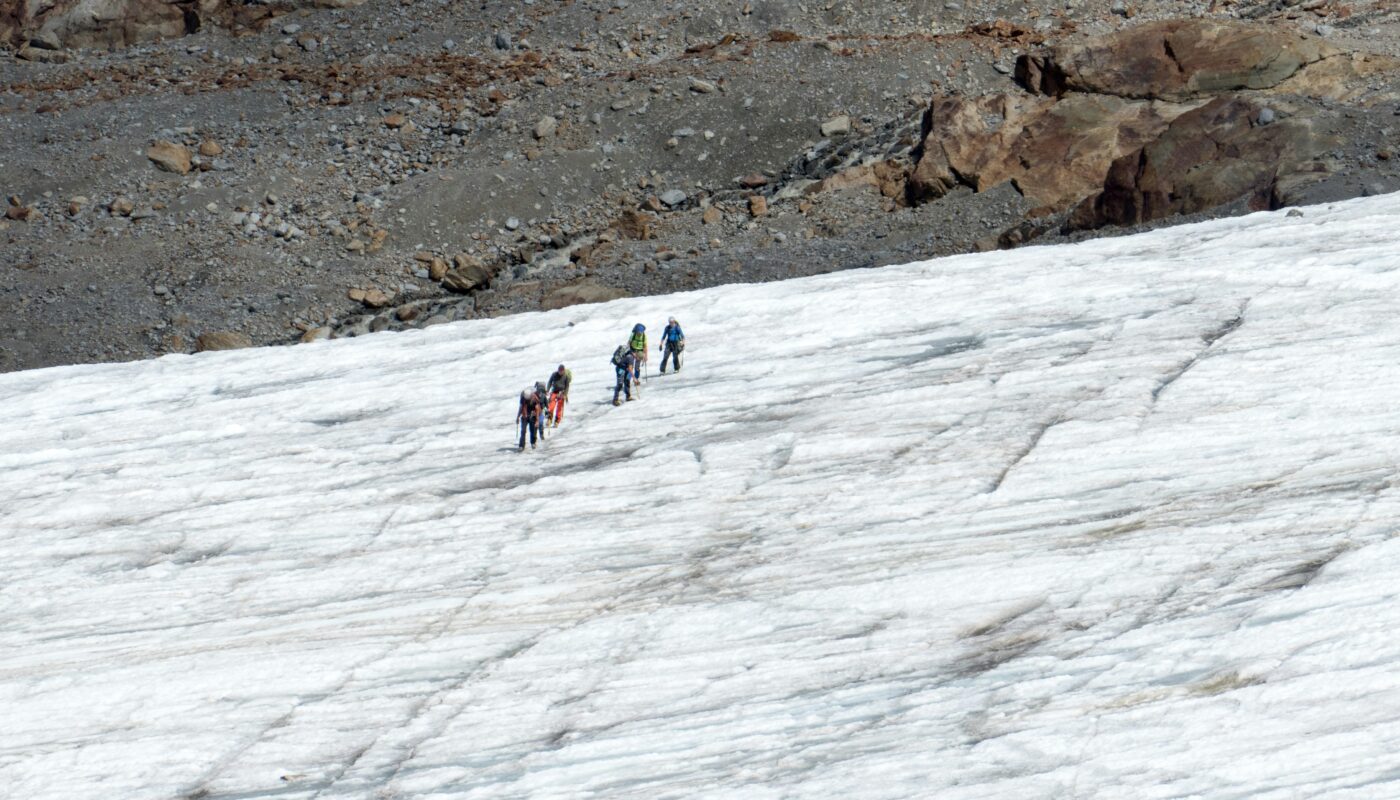
Team members are tied together to stop a fall into a crevasse.
2. Harness
Connects climbers to the rope.
3. Ice Axe
Used for balance, self-arrest, and anchoring.
4. Crampons
Metal spikes attached to boots for traction.
5. Helmet
Protects against falling ice or rocks.
6. Crevasse Rescue Equipment
Includes pulleys, carabiners, prusik cords, and ice screws.
7. Avalanche Gear (Seasonal)
Beacon, shovel, and probe when snow cover is significant.
Roped Travel: Why It Saves Lives
Roping up is one of the most important glacier safety practices. If one person breaks through a snow bridge, the others can arrest the fall and perform a rescue.
Key points:
- Proper spacing between climbers
- Rope kept taut, not dragging
- Constant awareness of teammates
Crevasse Rescue Basics
Even with ropes, teams must know rescue techniques:
- Building anchors in ice
- Using pulley systems to haul a person out
- Self-rescue methods if alone
Training and practice are critical. Panic and lack of knowledge can turn a survivable fall into a tragedy.
Navigation on a Glacier
Routes change yearly as ice moves. Old tracks may no longer be safe.
Safe navigation includes:
- Avoiding heavily crevassed zones
- Crossing snow bridges one at a time
- Staying clear of icefall areas
- Using maps, GPS, and local knowledge
Timing and Temperature
Morning travel is safer. Cooler temperatures strengthen snow bridges and reduce rockfall.
Afternoon heat increases:
- Snow bridge collapse risk
- Rockfall
- Ice instability
Understanding Snow Bridges
Snow bridges form when snow fills crevasses. They weaken with:
- Warm temperatures
- Rain
- Repeated foot traffic
Signs of weakness:
- Hollow sounds underfoot
- Sagging snow
- Visible cracks
Mental Preparedness
Glacier travel demands focus. Fatigue leads to mistakes.
Good practices:
- Regular breaks
- Hydration and food
- Clear communication
When to Turn Around
Good decision-making saves lives.
Turn back if:
- Weather worsens
- Team members are exhausted
- Snow conditions deteriorate
- Route becomes unclear
Summit goals never outweigh safety.
Why Guides Are Strongly Recommended
Professional guides bring:
- Route knowledge
- Rescue skills
- Hazard assessment
- Weather judgment
For beginners, guided glacier travel dramatically reduces risk.
Environmental Responsibility
Glaciers are fragile ecosystems. Follow Leave No Trace principles:
- Pack out waste
- Avoid contaminating meltwater
- Respect wildlife
Final Thoughts
Glaciers are awe-inspiring but unforgiving. Beneath their beauty lie crevasses, collapsing ice, and rapidly changing conditions. Safe glacier travel requires training, proper equipment, teamwork, and sound judgment.
Stepping onto a glacier without preparation is like entering an unfamiliar wilderness filled with hidden traps. With knowledge and respect, however, glaciers can be explored safely — offering unforgettable experiences in some of the most spectacular environments on Earth.