 by
by Glaciers are among the most powerful and visually arresting subjects in landscape photography. They embody time, movement, fragility, and scale—all wrapped in a palette of whites, blues, silvers, and shadows. Unlike static mountains or forests, glaciers shift, crack, melt, and reshape themselves constantly. For photographers, this makes them endlessly compelling but also uniquely challenging.
Capturing a glacier’s true character is not simply about finding the right location. It is about understanding angles, light, perspective, and timing. The same glacier can appear monumental, delicate, abstract, or ominous depending on where you stand and how you frame it. This guide explores how photographers can identify and use the most stunning glacier angles to create images that go beyond documentation and into visual storytelling.
Whether you are a seasoned landscape photographer or an enthusiastic traveler with a camera, learning how to “read” a glacier will elevate your work dramatically.
Understanding the Visual Language of Glaciers
Before discussing specific angles, it is important to understand what makes glaciers visually unique. Unlike rock or vegetation, ice interacts with light in complex ways. It absorbs, refracts, and reflects depending on density, thickness, and impurities.
Key visual characteristics include:
- Color gradients, from milky white snow to deep sapphire ice
- Textural contrasts, such as smooth ice fields against jagged crevasses
- Scale indicators, where tiny humans or rocks emphasize immensity
- Movement cues, including cracks, meltwater streams, and calving edges
Effective glacier photography emphasizes these traits rather than flattening them into a single, static view.
Wide-Angle Perspectives: Capturing Scale and Grandeur
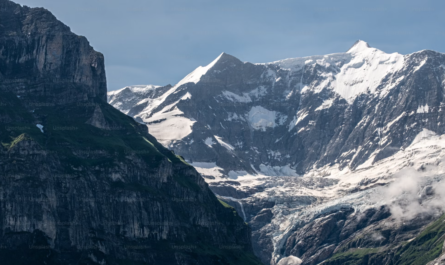
One of the most impactful ways to photograph glaciers is through wide-angle compositions that emphasize scale. From a distance, glaciers often resemble frozen rivers spilling through valleys, and wide lenses help communicate their immense size.
Best Situations for Wide Angles
- Overlooks or ridgelines above the glacier
- Valley floors where ice flows toward the viewer
- Locations where mountains frame the glacier on both sides
Composition Tips
- Include foreground elements like rocks, flowers, or trail edges
- Use leading lines created by ice flow patterns
- Avoid centering the glacier—let it guide the viewer’s eye diagonally
Wide-angle shots work best when the glacier’s shape is clearly defined and not lost in flat lighting.
Low-Angle Views: Making Ice Feel Monumental
Photographing from a low angle dramatically increases a glacier’s sense of power. Shooting upward from the glacier’s edge or terminus makes even small ice formations appear towering and formidable.
Why Low Angles Work
- They exaggerate height and mass
- Crevasses and ridges appear deeper
- Ice walls feel architectural and imposing
When to Use This Angle
- Near glacier tongues or snouts
- Along ice caves or meltwater channels
- During overcast light to avoid harsh shadows
Safety is critical here. Never approach unstable ice faces, and always respect marked boundaries.
Side Angles: Revealing Flow and Direction
Photographing a glacier from the side reveals its movement and structure. These angles emphasize how the ice flows downhill, bends around terrain, and fractures under pressure.
Visual Benefits
- Strong directional lines
- Repeating patterns of cracks and ridges
- Natural rhythm and balance
Side angles are especially effective during early morning or late afternoon, when shadows fall across the ice and enhance texture.
Aerial and Elevated Angles: Abstract Beauty
Looking down on a glacier transforms it into an abstract canvas. From above, meltwater streams resemble veins, crevasses form jagged geometry, and color variations become painterly.
Best Opportunities
- Mountain viewpoints
- Cable cars or aerial platforms
- Drones (where legally permitted)
Creative Possibilities
- Minimalist compositions
- Strong emphasis on pattern over scale
- Focus on color contrast between ice, rock, and water
Elevated angles often produce the most artistic glacier images, appealing to fine-art photographers.
Close-Up Angles: Ice as Texture and Detail
Not every glacier photograph needs to show the entire ice field. Close-up angles allow photographers to focus on details that reveal the glacier’s inner life.
What to Look For
- Air bubbles trapped in ice
- Blue ice layers formed under pressure
- Meltwater carving smooth channels
- Jagged crystalline edges
These images work best with soft, diffused light, which prevents glare and preserves subtle tonal variations.
Frontal Angles: Drama at the Ice Face
A direct frontal view of a glacier’s face—especially where it meets water or land—can be intensely dramatic. These angles convey confrontation, as if the glacier is advancing toward the viewer.
Ideal Conditions
- Overcast skies for even exposure
- Calm water reflecting the ice
- Icebergs or calved chunks in the foreground
Frontal angles are powerful storytelling tools, often used to highlight the glacier’s raw force or vulnerability.
Diagonal Compositions: Dynamic and Engaging
Diagonal framing introduces movement and tension into glacier photography. Instead of horizontal or vertical alignment, angling the glacier across the frame creates energy.
Why It Works
- Mimics natural ice flow
- Adds visual momentum
- Prevents static compositions
Diagonal angles are particularly effective when combined with strong foreground elements or contrasting terrain.
Seasonal Angles: How Time Changes Perspective
Glaciers look different throughout the year, and photographers should adjust angles accordingly.
Early Summer
- Snow-covered surfaces create clean lines
- Soft light enhances pastel tones
- Wide angles emphasize pristine scale
Late Summer
- Exposed blue ice offers texture
- Meltwater adds reflections and contrast
- Close-ups and side angles shine
Autumn
- Lower sun angles create long shadows
- Warm light contrasts with cool ice
- Dramatic side and diagonal views excel
Each season invites a different visual approach.
Light Direction: The Silent Sculptor
Angles mean little without light. Understanding how light interacts with ice is crucial.
Front Lighting
- Reveals color but flattens texture
- Best for showcasing blue ice tones
Side Lighting
- Enhances cracks, ridges, and depth
- Ideal for early or late in the day
Backlighting
- Makes ice glow from within
- Highlights translucency and edges
Observing light direction before setting up your shot often determines success.
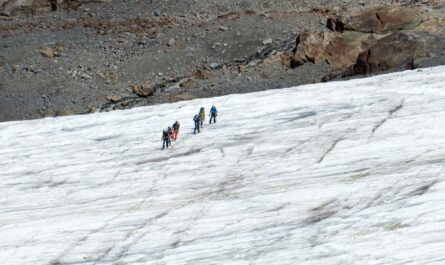
Human Elements: Using Scale Sparingly
Including a person in glacier photography can instantly communicate scale. However, this technique should be used thoughtfully.
Best Practices
- Keep figures small within the frame
- Place them against large ice features
- Avoid distracting clothing colors
Human elements work best in wide or elevated shots, where they emphasize the glacier’s immensity without dominating the scene.
Safety and Ethics in Glacier Photography
Pursuing dramatic angles should never compromise safety or environmental responsibility.
Key Guidelines
- Never walk on glaciers without proper training
- Respect restricted areas
- Avoid disturbing fragile ice formations
- Leave no trace
Ethical photography preserves glaciers for future generations—and future images.
Telling a Story Through Angles
The most compelling glacier photography often uses multiple angles to tell a story. A wide establishing shot sets the scene, close-ups reveal detail, side angles show movement, and frontal views add drama.
Together, these perspectives create a visual narrative that captures not just what a glacier looks like, but what it feels like to encounter one.
Conclusion: Seeing Glaciers with Intention
Glaciers demand patience, observation, and respect. They are not static backdrops but living landscapes shaped by time, pressure, and climate. By carefully choosing angles—wide or intimate, elevated or low, frontal or diagonal—photographers can reveal layers of meaning hidden within the ice.
The most stunning glacier images are rarely accidental. They are the result of understanding light, terrain, and perspective, combined with a willingness to slow down and truly see the ice. When photographed with intention, glaciers become more than subjects—they become stories frozen in motion.